Scenario guide
Found a Loved One Days Later: What Happens Now
The signs were there in hindsight: the unanswered phone, the mail in the box, the neighbor who had not seen them. Then a key in the lock, a smell at the door, and the discovery nobody is prepared for. This page is for the days after that discovery: what has happened inside the home, what happens next, and what you are allowed to leave alone for now.
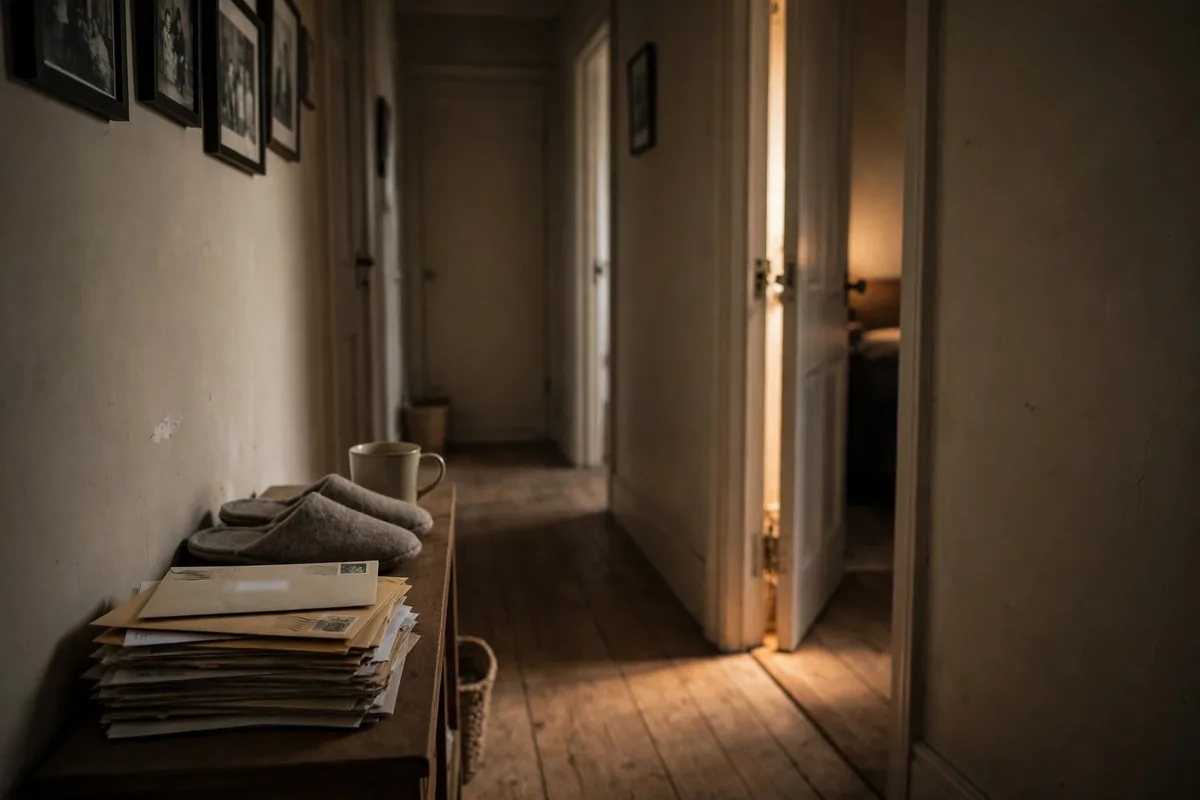
Finding a loved one days later is one of the hardest discoveries a family can face, and it is not your fault. By the time of discovery, fluids have spread into flooring and furniture and the room is a genuine health risk. Do not try to clean it. Officials will document and remove your loved one; after that, a professional crew restores the home, and most big decisions can wait.
First, the guilt, because it arrives before everything else
Almost every family in this situation asks some version of the same question: how did we not know? The honest answer is that late discovery is the normal shape of these cases, not the exception. Adults who live alone guard their routines. They decline help for pride, privacy, or the simple wish not to be a burden, and the people who love them honor that, because overriding it would have been its own kind of harm. A person found after days is almost always a person who was checked on as often as they allowed. Nothing about the days they lay undiscovered was caused by you, and nothing you do now should be organized around punishing yourself for them.
What the days did to the home
This part is clinical, and you can skip it if you do not need it. Decomposition begins within minutes of death. In the first days, fluids leave the body and soak through bedding and mattress into carpet, padding and flooring. In a warm home the process accelerates sharply; past roughly 72 hours above about 68 degrees, a scene crosses into advanced decomposition, and bacterial and insect activity roughly doubles with every 18 degree rise in temperature. The practical result: the affected area grows beyond the spot where the person lay, odor works deep into soft materials and walls, and the room becomes a real infection risk. It is also why every day of delay becomes demolition later: scenes found early are often containable, while late found scenes commonly need carpet, padding, subfloor and sometimes drywall removed. The factual sequence is set out in our guide on what happens inside a home over time, and the service built for it is unattended death cleanup.
Why you must not clean this yourself
The instinct is understandable: close the door on the memory by scrubbing it away. Resist it. The contamination in a late discovery is not surface dirt; it is inside materials, it carries infection risk, and household cleaning spreads it more than it removes it. There is a second reason, harder to see in the moment: families who clean a scene like this themselves carry the memory of doing it. The crew exists so that the last memory of that room is not yours to keep. Our guide on cleaning up a biohazard yourself draws the line honestly: the small cases household cleaning covers, and the point, which this situation is well past, where the work becomes regulated and professional.
What happens next, in order
- Officials do their part. Police and the coroner or medical examiner document the death and arrange removal, usually through a funeral home. The body typically stays in the home a few hours; you do not have to wait in the house with it.
- The room gets closed. Door shut, people and pets kept out. Nothing inside needs your attention today.
- A crew is matched and quotes in writing. Assessment first, then removal of what cannot be disinfected, disinfection of what remains, odor treatment at its source, and testing before handover.
- The money routes open in parallel. Homeowners insurance commonly covers this cleanup; open the claim early. Where the death followed a crime, victim compensation may add to it.
The 72 hour rule, restated for finders
Decide nothing financial in the first 72 hours. Shock impairs exactly the judgment these days demand, and the documented failures in this trade follow one pattern: a family in shock, electronic documents, a signature without a written estimate. Almost nothing here is urgent inside three days except care for the living and for any animals. The cleanup contract, the insurance decisions, the questions about the house itself: all of them will keep until day three, and you will handle them better then. This is not delay. It is the one piece of sequencing advice aimed at finders specifically, and it protects everything else on this page.
The pet, if there was one
In many late discoveries there is an animal in the home: a dog or cat that has been without food or water for the same days, possibly loose in the contaminated room, frightened, and sometimes guarding the body or hiding from strangers. No agency's job covers the pet, so it lands with whoever asks first, which should be you, on the first call. A relative taking the animal the same day is the best outcome; animal control is the fallback when nobody can. And tell the crew before they arrive that a pet is or was present: it changes how they open the room, and it is information they would rather have early.
When it is over
The room gets handed back clean, tested and quiet, usually within days of the work starting. What takes longer is ordinary: the funeral, the paperwork, the estate. Two things are worth knowing. First, the images of a discovery like this can replay, uninvited, for weeks; that is a known and treatable stress response, not weakness, and a doctor or counselor will recognize it on sight. Second, if the question underneath everything is what happens to the house now, whether anyone can live in it, stay in it, or eventually sell it, those questions have their own answers in our guide on staying in the house after a death. And if the worry that will not settle is the smell itself, the one that seems burned into the walls, our page on an odor that keeps coming back after the cleanup explains why it returns and what finally ends it. The checks that stop most late discoveries are habits, not equipment, and they change with the seasons; our seasonal calendar sets them out across the year. For now: close the door, make the calls, and let other people carry the room.
Questions families ask us
How long can someone lie undiscovered before the home is damaged?
Changes start within hours, and fluids spread into bedding, flooring and furniture over the following days. Past roughly three days in a warm home, the affected area has usually grown well beyond the room where the person died, and more material has to be removed. Crews handle cases of weeks routinely; the home can still be restored, but the job is bigger.
Is it my fault for not checking sooner?
No. People live alone, keep their own hours, and decline visits for ordinary reasons, and adults are entitled to their privacy. Families discover late in almost every case like this, because the person was loved by people who respected their independence. The delay is part of the situation, not a failure by you.
Will the smell in the house ever go away?
Yes, when the work is done in the right order: the materials the fluids soaked into are removed, what remains is disinfected, and then the air is treated. Odor is in the materials, not just the room, which is why airing out alone never quite finishes it. A properly completed job is tested in a warm, closed room.
Do I have to go back into the house?
No. Many families never enter again until the work is done, and some hand over a key and stay away for the whole job. The crew lead updates you by phone and walks you through only when the space is clean. If belongings must be retrieved first, the crew fetches them for you.
What happens to their pet?
Ask about it on the first call, because no official's job covers the animal. A pet in the home needs care the same day; if a relative cannot take it, animal control is the fallback. Tell the cleanup crew a pet is present before they arrive, because a frightened animal loose in a contaminated room changes how they enter.
One call starts the process
You do not have to face the scene, the smell or the paperwork alone. Call and we will connect you with a trained, verified local cleanup crew, day or night.
Call NowOpen 24 hours, every day, nationwide.