Services hub
Biohazard Cleanup Services
One network, every situation. This hub owns the full list of biohazard cleanup services we connect callers with. Each service has its own page with its process, its typical costs and its questions answered.
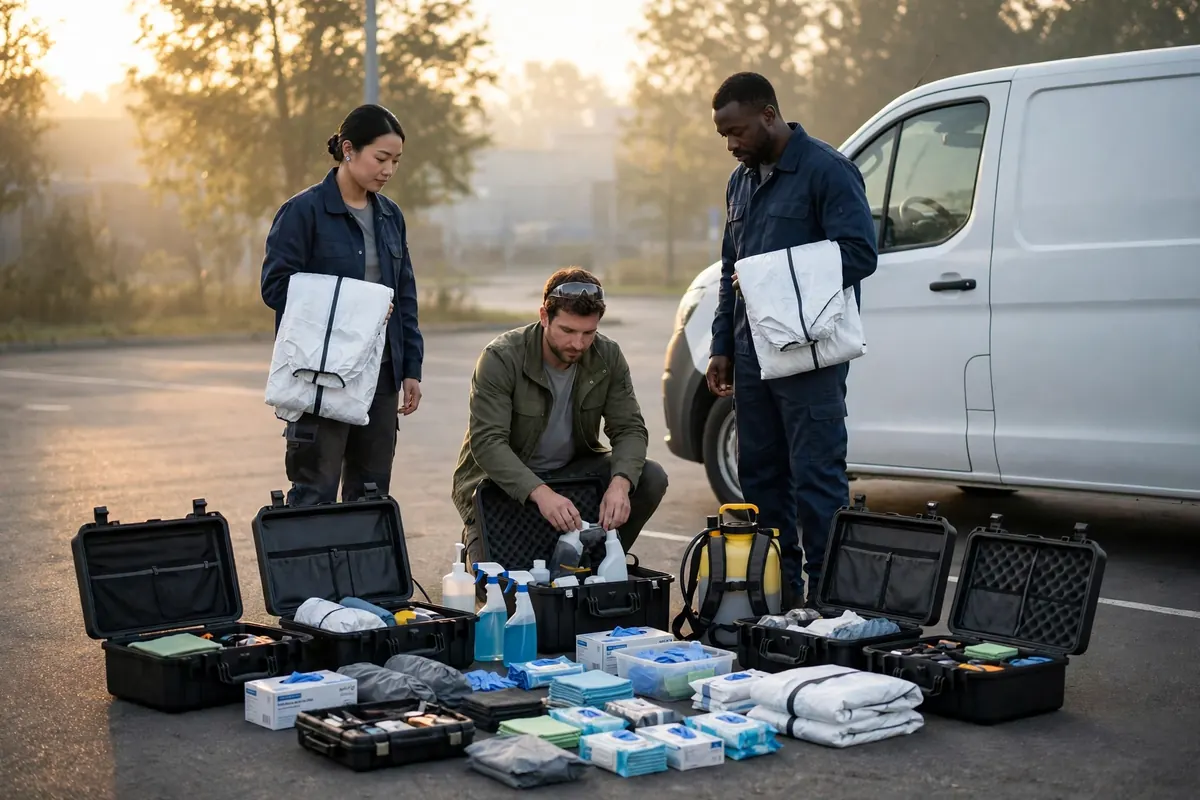
Biohazard cleanup services cover the safe removal and disinfection of blood, bodily fluids and other biological hazards. The main services are crime scene cleanup, unattended death cleanup, suicide cleanup, trauma and blood cleanup, tear gas cleanup, hoarding cleanup and full biohazard remediation, all available nationwide, day and night.
Every service, explained on its own page
Crime Scene Cleanup
After the police release the scene, trained crews clean and disinfect the space so it can be used again.
02Unattended Death Cleanup
When a death is found days or weeks later, crews remove biohazards, disinfect and clear odors with care.
03Suicide Cleanup
Quiet, discreet cleanup after a suicide, handled by trained crews so family never has to face the scene.
04Hoarding Cleanup
Patient, judgment-free cleanouts that sort, save what matters and make the home safe again.
05Trauma Cleanup
Accidents and injuries leave blood and biohazards behind. Crews clean and disinfect the area fully.
06Blood Cleanup
Blood is a biohazard even in small amounts. Crews remove it safely and disinfect what it touched.
07Tear Gas Cleanup
Tear gas and pepper spray residue gets into every surface. Crews remove it so the space is livable again.
08Biohazard Remediation
Full remediation for properties: removal, disinfection, waste transport and clearance testing.
09Death Cleanup
General cleanup after a death at home, in a rental or in a vehicle, handled with discretion.
What every service includes
Whichever situation you are facing, the core of the work is the same, and it follows the safety rules that govern this trade. Crews wear full protective equipment, because federal workplace rules (the OSHA bloodborne pathogens standard) treat blood and bodily fluids as an infection risk until they are proven clean. Affected material is removed, not wiped over. Surfaces are washed, then disinfected with hospital grade products, then tested. Waste is sealed in regulated medical waste containers and moved by licensed transport to approved disposal. Nothing from a scene goes in household trash.
The differences are in the details around that core. A crime scene cleanup starts only after the police release the property. An unattended death cleanup deals with fluids that have had days or weeks to soak in, and with odor that needs its own treatment. A suicide cleanup is planned around the family: what they should not see, what they want kept, and when they want to come back. A hoarding cleanup is measured in days, not hours, and half the work is careful sorting. The service pages spell out those differences honestly.
Services we do not offer pages for
Two searches bring people here that we do not build pages around. Meth lab cleanup and fentanyl cleanup are handled by a small number of specialist firms under state environmental programs, and the honest advice is to start with your state environmental agency or the police department that seized the property, because remediation there is often supervised and sometimes state funded. If you are unsure whether your situation fits a service on this hub, call and describe it; if a specialist is the right answer, we will say so.
Costs and coverage
Every service page links to the cost picture for that situation. The two cost guides, biohazard cleanup cost and crime scene cleanup cost, publish typical ranges with the same promise everywhere on this site: the final price is confirmed by the contractor after seeing the job, in a written quote before work starts. Insurance and state victim compensation can cover much of the bill; the insurance coverage page explains how.
Where services are available
All services on this hub are available nationwide through local crews. The locations hub shows coverage state by state, and every state page lists the cities and ZIP codes its crews serve.
Questions families ask us
What is the difference between these services?
The process is similar, but the situation differs. A crime scene follows police work, an unattended death involves time and decomposition, and hoarding is a longer cleanout with sorting and saving what matters. Each page explains the process for that situation.
Do the same crews handle all of these situations?
Most trained biohazard crews handle the full range, because the safety process, disinfection and waste rules are the same. Hoarding cleanouts are the exception: they take longer and involve sorting, so they are scheduled differently.
Which service do I need if I am not sure?
Call and describe what happened in plain words. The right service is chosen from the situation, and you never need the technical name before you call.
One call starts the process
You do not have to face the scene, the smell or the paperwork alone. Call and we will connect you with a trained, verified local cleanup crew, day or night.
Call NowOpen 24 hours, every day, nationwide.