Service
Trauma Cleanup
A serious fall, a workplace accident, a medical emergency with heavy bleeding: once the ambulance leaves, the room still holds what happened. Trauma cleanup restores that space properly, so the people who live or work there are not the ones who have to clean it, and so it is genuinely safe when they use it again.
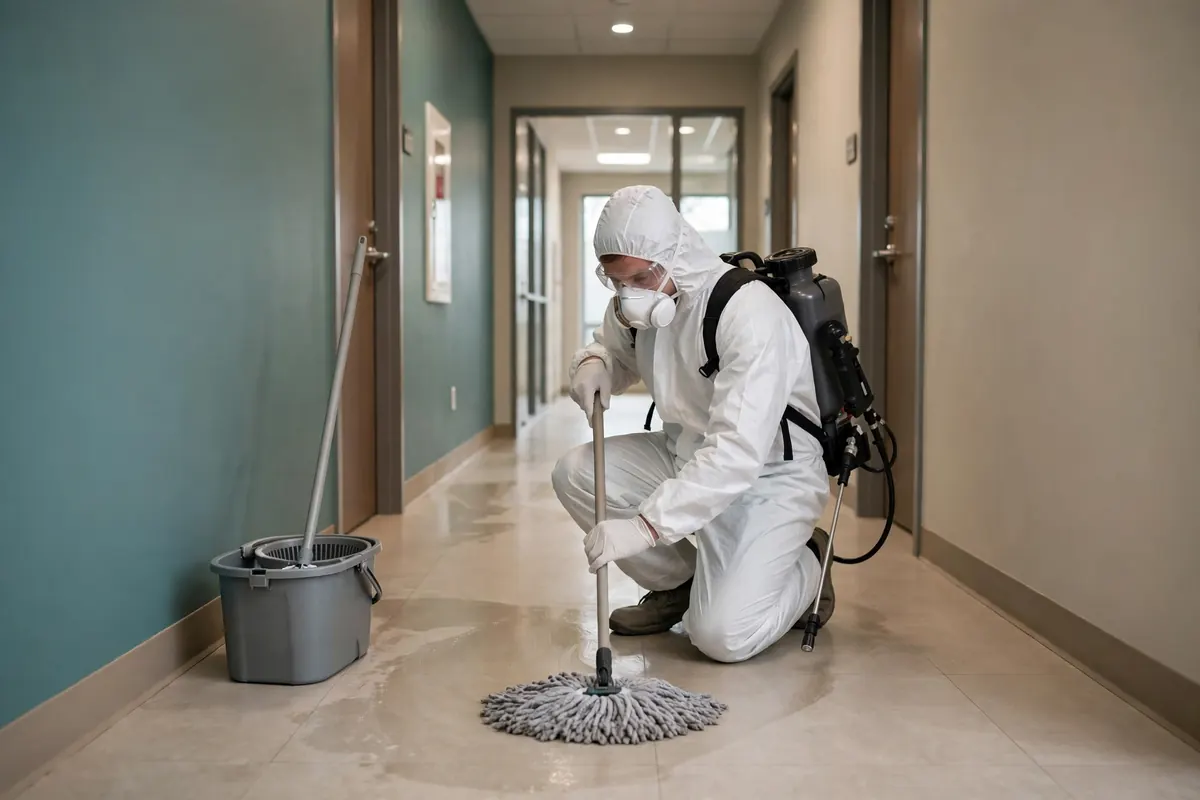
Trauma cleanup is the professional cleaning of a space after a serious accident or injury has left blood or bodily fluids behind. Crews in protective equipment remove affected material, disinfect every surface to the bloodborne pathogen standard, and dispose of waste safely, at homes, workplaces and rental properties.
Where this work is needed
Homes
Falls are the most common call, especially for older people living alone. Blood soaks into carpet and bedding quickly, and family members often discover both the injury and the scene. A crew takes the cleaning off their hands entirely.
Workplaces
Warehouses, workshops, kitchens and construction sites see injuries that leave blood on floors, machinery and vehicles. Employers carry a legal duty here: federal workplace rules (the OSHA bloodborne pathogens standard) require that anyone assigned to clean blood be trained, vaccinated where offered, and given protective equipment. Most employers do not keep that programme in house, so they call a crew whose whole job is built around it. The crew documents the work, which matters for the employer's own records.
Vehicles and rentals
Accidents in cars, and injuries in rental properties and holiday lets, leave owners with a biohazard in a small, fabric heavy space. Vehicle interiors need the same process as a room: removal of affected trim and upholstery where fluids have soaked in, then disinfection and odor treatment.
The cleanup process
The crew assesses the scene and quotes in writing first. Containment keeps the work area separate. Affected porous material (carpet, padding, upholstery, bedding) is removed and sealed as regulated waste; hard surfaces are washed and disinfected with products rated for bloodborne pathogens; then surfaces are tested to confirm the disinfection worked. Where blood has reached subfloor or wall cavities, the crew opens them up rather than sealing contamination in. The final price is confirmed by the contractor after seeing the job, in a written quote before work starts.
How trauma cleanup differs from nearby services
If the accident followed a crime, the same work is arranged as crime scene cleanup once police release the scene. If the main problem is blood alone, a cut, a nosebleed incident, a medical episode, the focused page is blood cleanup. And where a trauma was not survived, crews handle the space under death cleanup with the same care. One call covers all of these; the label is chosen from your situation, not by you.
Costs
Trauma scenes vary from one room with a small affected area to a full workplace shutdown, so prices vary with size, materials and hours on site. Typical ranges by situation are published on the biohazard cleanup cost page. Homeowners insurance covers many home incidents, workers compensation and commercial policies are usually involved at work, and the crew's paperwork supports either claim.
Questions families ask us
What counts as a trauma scene?
Any place where a serious injury or accident has left blood or bodily fluids: a fall at home, a workplace accident, a vehicle collision scene on private property, or a medical emergency with heavy bleeding. If blood is present beyond a small cut, it is a biohazard job.
Can I just clean a blood spill myself?
A few drops on a hard floor from your own minor cut is household cleaning. Anything larger, anything soaked into carpet or furniture, and any blood that is not your own should be treated as a biohazard. You cannot see infection risk, and household products do not disinfect to the required standard.
Do businesses have to use a professional crew?
Employers have a legal duty to protect whoever cleans up blood at work. Federal rules require training, protective equipment and a written exposure plan for employees who handle it, which is why most businesses call a crew instead of asking staff.
How quickly can a trauma cleanup happen?
Crews respond around the clock. Homes are usually cleaned the same day; businesses often schedule for the same evening so they can reopen the next morning.
One call starts the process
You do not have to face the scene, the smell or the paperwork alone. Call and we will connect you with a trained, verified local cleanup crew, day or night.
Call NowOpen 24 hours, every day, nationwide.