Service
Biohazard Remediation
Remediation is the word insurers, property managers and buyers use, and it means something specific: not just a clean property, but a documented one. If a contaminated property needs to be re-let, sold, reopened or signed off, biohazard remediation is the process that produces both the safe space and the paper trail that proves it.
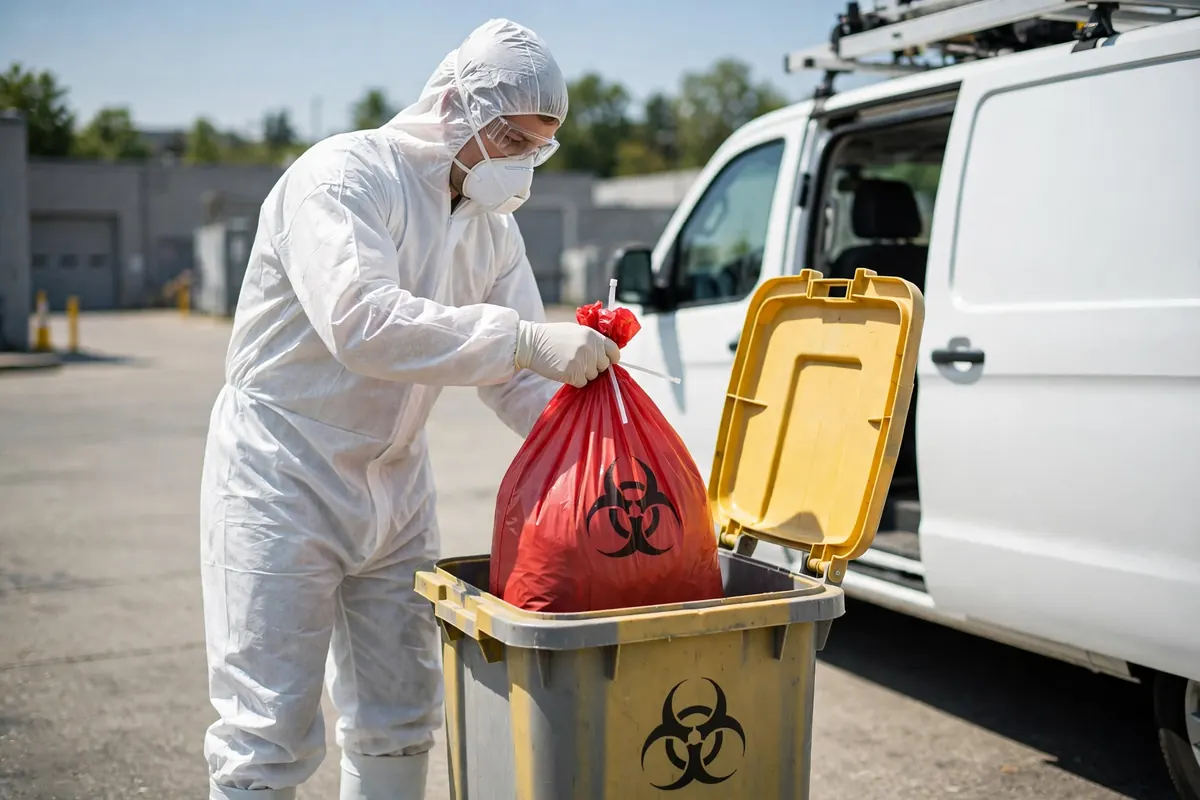
Biohazard remediation is the full, documented process of returning a contaminated property to safe use: assessment, removal of affected material, disinfection, clearance testing and licensed waste disposal. It is the term used most for larger residential jobs and for commercial property, insurance claims and property transactions.
The remediation process, in order
1. Assessment and scope
A trained assessor inspects the property, identifies every affected material and area, and writes a scope: what will be removed, what will be disinfected in place, and what testing will confirm the result. You receive a written quote against that scope. The final price is confirmed by the contractor after seeing the job, in a written quote before work starts.
2. Containment and removal
The work area is sealed from the rest of the property so nothing migrates. Affected porous materials (carpet, padding, upholstery, mattresses, some drywall and insulation) are removed and packaged as regulated waste. In four states the trade is formally registered (California, Georgia, Florida, Illinois) and waste handling has its own permits; crews are checked against those rules where they apply.
3. Cleaning and disinfection
Remaining surfaces are washed and disinfected with products rated against bloodborne pathogens, following the exposure control approach the OSHA standard requires for this work. Odor sources are removed rather than masked; where odor has reached structure, sealing treatments are applied after disinfection.
4. Clearance testing and documentation
Surface testing confirms disinfection worked; any failing area is re-cleaned and re-tested. You receive the job documentation: scope, waste transport manifests and test results. That file is what a landlord shows a new tenant, a seller shows a buyer, and an insurer attaches to a closed claim.
When remediation is the right call
- Property changing hands: estates, probate sales and purchases after a death on the property. See our guide on selling a house after a death.
- Rentals returning to market: after a tenant death, hoarding or an incident, before new tenants view the property.
- Commercial reopening: workplaces, retail and hospitality spaces that need documented clearance for staff and customers.
- Insurance driven work: larger claims where the insurer wants scope and clearance records, not just an invoice.
For a family home in the days after a death, the same standard of work is arranged through the service pages: crime scene cleanup, unattended death cleanup or death cleanup. The process is identical; remediation is simply the name used when documentation leads.
Costs
Remediation pricing follows the scope: area, materials removed, testing and documentation. Typical ranges for the common scenarios sit on the biohazard cleanup cost page, and the insurance coverage page explains how claims for this work usually run.
Questions families ask us
What is the difference between biohazard cleanup and biohazard remediation?
In everyday use they mean the same service. Remediation is the wider, more formal word: the full process of assessing, removing, disinfecting and verifying a contaminated property, often used for larger jobs, commercial property and insurance paperwork. Cleanup pages on this site describe the same work for homes.
Do you handle commercial and industrial properties?
Yes. Crews remediate offices, warehouses, retail units, healthcare support spaces and vehicles fleets as well as homes. Commercial jobs add documentation: scope reports, waste manifests and clearance results for the property file.
What does clearance testing involve?
After cleaning and disinfection, surfaces are tested with swab methods that detect biological residue. Failed areas are re-cleaned and re-tested. The results are recorded, which is what insurers, buyers and landlords rely on to treat the property as restored.
Can remediation include repairs, like replacing flooring?
The remediation crew removes affected material and makes the space safe. Putting back flooring, drywall and finishes is usually a separate contractor's job, and the crew will tell you plainly where remediation ends and repair begins.
One call starts the process
You do not have to face the scene, the smell or the paperwork alone. Call and we will connect you with a trained, verified local cleanup crew, day or night.
Call NowOpen 24 hours, every day, nationwide.