Costs
Biohazard Cleanup Cost
Nobody in this trade likes publishing prices, which leaves families guessing at the worst possible moment. We publish typical ranges instead. They are drawn from published industry cost guides and are labelled as what they are: estimates. Your written quote, after the crew sees the property, is the real number.
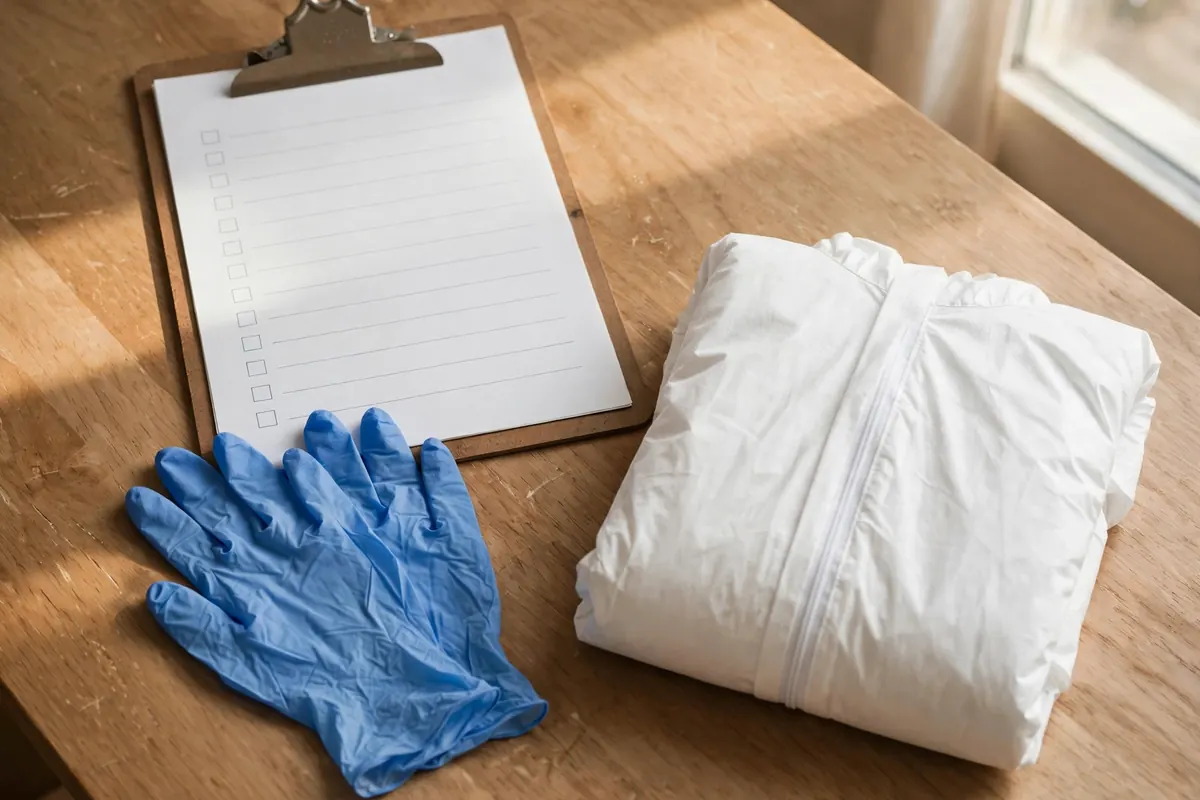
Most biohazard cleanup jobs fall between $1,000 and $5,000. A small contained scene can cost a few hundred dollars; a large unattended death or hoarding property can reach $10,000 or more. The main drivers are the size of the affected area, the time involved, and how much material must be removed.
Typical ranges by situation
| Situation | Typical range | Why it lands there |
|---|---|---|
| Blood cleanup, small contained spill | $300 to $900 | Short visit, hard surfaces, little or no material removed |
| Trauma scene, one room | $1,000 to $3,000 | Carpet and padding removal is common, plus disinfection and testing |
| Suicide cleanup, one room | $1,500 to $4,000 | Spread can be wider than expected; furniture and flooring often affected |
| Unattended death, found within days | $1,500 to $5,000 | Fluids into flooring, odor treatment, mattress and carpet removal |
| Unattended death, found after weeks | $3,000 to $10,000+ | Subfloor and sometimes wall material affected; longer on site |
| Tear gas cleanup, per room | $1,000 to $2,500 | Extraction, washing, possible duct cleaning on top |
| Hoarding cleanup, per day of crew work | $1,000 to $2,500 | Whole properties usually run two to five days |
| Vehicle cleanup | $500 to $2,000 | Trim and upholstery removal drives the price |
How to read these ranges: they are typical prices for typical jobs, published as estimates from industry cost guides, not quotes. The final price is confirmed by the contractor after seeing the job, in a written quote before work starts.
What moves the price
Size and spread
The single biggest factor. Fluids spread further than the eye can see, into padding, subfloor, seams and wall bases. A crew quotes on the full affected area, because cleaning only the visible part fails testing and leaves odor behind.
Time since the event
Hours and days matter most in death cases. A death found the same day is a smaller, cheaper job than the identical death found three weeks later. This is not a sales line; it is the physics of fluids and bacteria.
Material that must be removed
Disposal is regulated and priced by volume. Every mattress, carpet roll and section of flooring that leaves as medical waste adds transport and disposal cost, and replacing flooring afterward is a separate contractor's bill, not part of the cleanup price.
Access and timing
Upper floor apartments without lifts, hoarded properties where crews must clear a path, and jobs that must finish before a fixed deadline all take more crew hours. Standard daytime response in a metro area is the baseline the ranges assume.
Who pays, in practice
Start with insurance. Homeowners policies commonly cover cleanup after a death, accident or crime at the property, and the claim is usually filed like any other property claim; our insurance coverage page goes step by step. After a violent crime, your state victim compensation program can repay cleanup costs up to its limits, and it is underused simply because families do not know it exists. Landlords usually claim on their property policy. Estates pay from the estate where there is no policy.
For crime scene prices specifically
Crime scenes carry their own cost picture, including investigation residue and police release timing. The dedicated page is crime scene cleanup cost. For the service itself, start at crime scene cleanup.
Questions families ask us
Why do quotes vary so much between companies?
Because scope varies: one company may quote to wipe surfaces while another quotes removal of flooring and subfloor treatment. Compare what is included, not just the number, and always get the quote in writing before work starts.
Is the assessment itself charged for?
Practices vary by contractor. Ask on the call. What should never happen is work starting before you have seen a written price and agreed to it.
Does insurance really pay these amounts?
In many cases yes, for cleanup after a death, accident or crime on an insured property. The crew's invoice and waste paperwork are the documents insurers ask for, and our insurance page explains the claim in steps.
What is the cheapest part of a cleanup to skip?
None of it, safely. The stages that look optional, testing and odor source removal, are the ones that prevent the smell returning and the space testing positive later. A smaller scope today usually becomes a second job tomorrow.
One call starts the process
You do not have to face the scene, the smell or the paperwork alone. Call and we will connect you with a trained, verified local cleanup crew, day or night.
Call NowOpen 24 hours, every day, nationwide.