Guide
What Is Biohazard Cleanup?
The phrase sounds industrial, but the situations behind it are domestic: a parent dies at home, a tenant is found days later, a worker is injured in a warehouse. This guide defines the term properly, so you can tell where ordinary cleaning ends and this work begins.
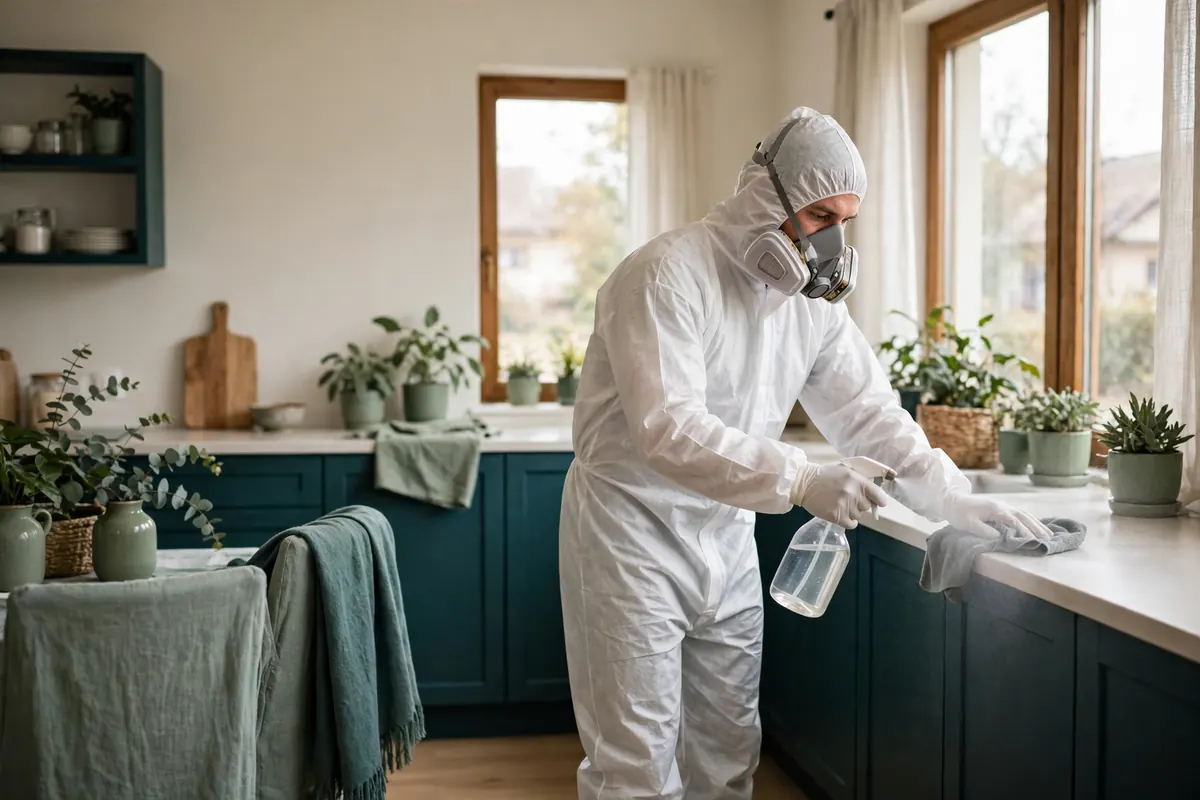
Biohazard cleanup is the professional removal, disinfection and safe disposal of biological hazards: blood, bodily fluids and material soaked in them, after deaths, injuries, crimes and hoarding situations. It is done by trained technicians in protective equipment, following a federal safety standard, and it ends with the space tested and safe to use.
What counts as a biohazard
A biohazard is biological material that can carry infection or otherwise harm health. In homes and workplaces that means, above all, blood and bodily fluids and anything they have soaked into: mattresses, carpet, upholstery, flooring, bedding. It extends to human tissue, to the fluids released after death, and to waste contaminated by any of these. Some related hazards travel with the work: sharps such as needles, and in some properties chemical or drug residue. The point that surprises people is that time does not neutralise the risk quickly: hepatitis B, for example, can remain infectious in dried blood for days.
What the work involves
Cleanup in this field follows a set sequence, because each stage protects the next. Assessment first: mapping the full spread, including inside materials. Containment: sealing the work area so nothing migrates. Removal: affected porous material comes out and is packaged as regulated waste. Cleaning and disinfection: remaining surfaces treated with products rated against bloodborne pathogens. Verification: surface testing confirms the disinfection worked. Disposal: waste moves by licensed transport to approved treatment, never to household trash. Odor is handled inside the same sequence by removing its source, not perfuming over it.
Who does it, and under what rules
Specialist local firms employ the technicians. In most states the individuals are not licensed; the obligations sit with the employer under the Occupational Safety and Health Administration's bloodborne pathogens standard: training, protective equipment, a vaccination offer and a written exposure control plan. Four states (California, Georgia, Florida and Illinois) add registration or permit systems for the firms or the waste, covered in our guide on how cleanup crews are vetted.
The situations it covers
One trade, several doors in: crime scenes after police release, unattended deaths, suicides, accidents and injuries, blood spills large and small, hoarding properties, tear gas residue, and deaths of every kind under death cleanup. If you are facing one of them now, the service starts at the homepage.
Related guides
Biohazard cleanup vs regular cleaning explains where the line sits in practice. How biohazard waste is disposed of follows the waste after it leaves your property.
Questions families ask us
Is biohazard cleanup the same as crime scene cleanup?
Crime scene cleanup is one kind of biohazard cleanup: the kind that follows a crime. The wider field also covers unattended deaths, suicides, accidents, hoarding properties and blood spills with no crime involved at all.
Who does biohazard cleanup?
Trained technicians employed by specialist local firms. They work under the federal bloodborne pathogens safety standard, wear full protective equipment, and move waste through licensed transport to approved treatment.
When is something a biohazard rather than just dirty?
When it involves blood, bodily fluids, human tissue, or material soaked in them, plus certain chemical and drug residues. The test is infection and safety risk, not appearance: dried blood on a subfloor is a biohazard; mud on a boot is not.
One call starts the process
You do not have to face the scene, the smell or the paperwork alone. Call and we will connect you with a trained, verified local cleanup crew, day or night.
Call NowOpen 24 hours, every day, nationwide.