Service
Tear Gas Cleanup
Tear gas does its job in minutes and then refuses to leave. The powder and oil settle on every surface, work into carpets and upholstery, and ride the ventilation system into rooms the canister never reached. People move back in, turn the heating on, and start coughing again. Tear gas cleanup is the unglamorous, thorough work of getting every trace of it out.
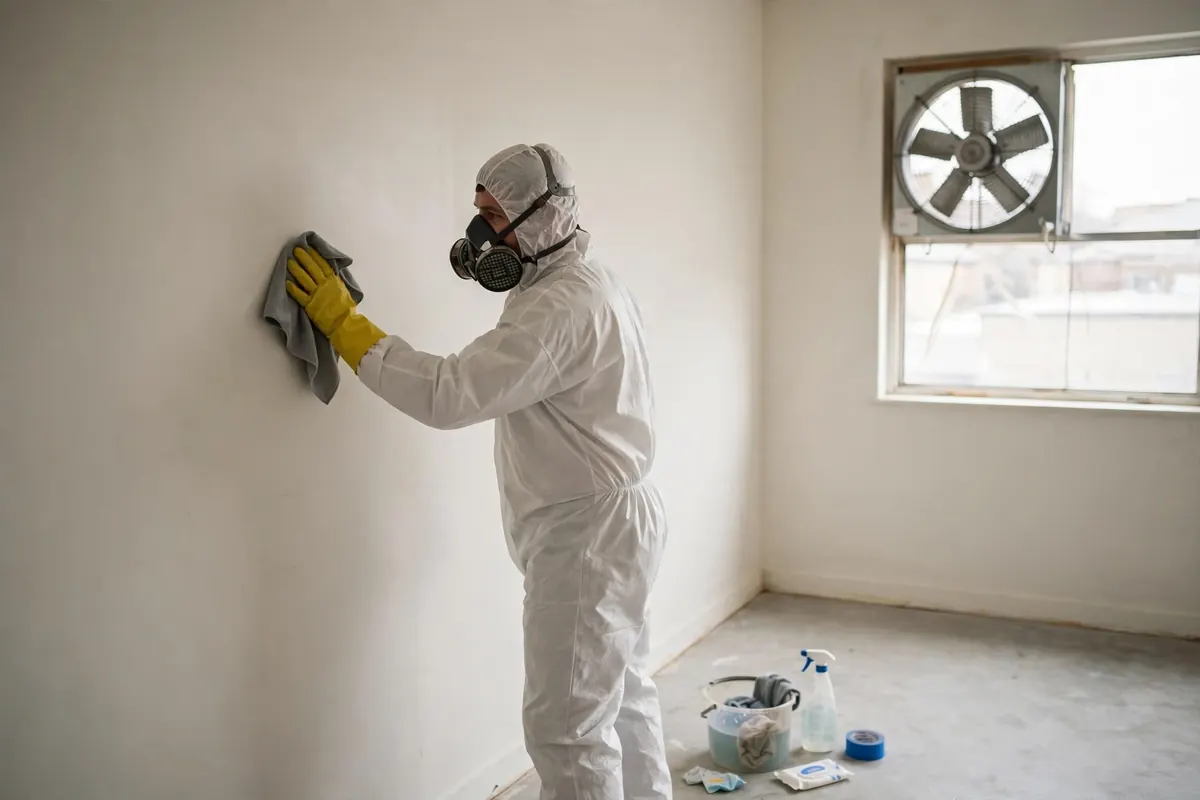
Tear gas cleanup is the removal of tear gas, pepper spray and CS powder residue from a home or business after police activity or an incident. The residue settles into carpets, soft furnishings and air ducts and keeps irritating eyes and lungs until it is professionally extracted, washed out and verified gone.
How residue behaves
CS and CN powders are heavier than air and fall onto floors, counters, bedding and open food. Pepper spray adds an oil that clings. Both reactivate: vacuuming with a household machine blows them back into the air, steam cleaning can drive them deeper, and warmth lifts them out of soft materials for weeks. That behaviour is why the cleanup order matters: extract first, wash second, ventilate throughout, and test at the end by actually spending time in the space with the heating running.
The cleanup process
Assessment and protection
The crew maps where canisters landed and where air flows, then seals the work area. Crews wear respirators and eye protection throughout; this is one job where the cleaners need the same protection as anyone entering the scene.
Extraction and washing
Loose powder is removed with specialist vacuum equipment fitted for fine particles. Hard surfaces are washed with solutions that neutralise the agents. Carpets and soft furnishings are deep extracted; items that hold residue beyond cleaning, some bedding, open food, soft toys, are disposed of with your agreement. Ductwork and HVAC filters are cleaned or replaced where the system carried residue.
Verification
Before handover, vents are run and the crew spends time in the rooms. If eyes water, the work is not done. That simple, human test is the standard your family will apply the first night back, so crews apply it first.
Who calls for this service
Landlords after police remove a barricaded tenant, homeowners after a standoff or a mistaken address nearby, businesses after an incident inside the premises, and families after a defensive spray discharge indoors. When the gas followed a crime or an arrest at the property, the visit usually joins up with crime scene cleanup so investigation residue and blood, where present, are handled in the same visit.
Costs
Price follows the number of rooms, how much soft furnishing is involved, and whether ductwork needs cleaning. Typical ranges for biohazard work sit on the cost page, and the rule is the same as everywhere on this site: the final price is confirmed by the contractor after seeing the job, in a written quote before work starts. Property insurance is worth checking: sudden police activity damage is a covered event under many policies.
Questions families ask us
Why does tear gas keep affecting people days later?
Tear gas and pepper spray are fine powders and oils that settle into carpets, soft furniture, clothing and ventilation ducts. Heat and movement stir them back into the air, which is why a room can feel fine, then burn eyes again when the heating runs.
Can I remove tear gas residue myself?
Small exposures on hard surfaces sometimes clear with heavy venting and washing. Whole room contamination, especially with carpets, soft furnishings or an HVAC system involved, needs professional removal: the residue has to be extracted, not spread around, and crews use protective equipment because the work itself is an exposure.
How long does tear gas cleanup take?
A single room is often a day. A whole apartment or business with ductwork involved can take two to three days, including airing and a final check before people move back in.
Who pays for tear gas cleanup in a rental?
It depends on how the gas got there. After police activity, costs sometimes fall to the property owner, whose insurance may cover them; after an incident caused by a tenant or a third party, claims may run against them or their insurer. We keep full paperwork so claims are possible either way.
One call starts the process
You do not have to face the scene, the smell or the paperwork alone. Call and we will connect you with a trained, verified local cleanup crew, day or night.
Call NowOpen 24 hours, every day, nationwide.