Service
Crime Scene Cleanup
When the police finish at a home or business, they take their evidence and they leave. What they leave behind, the blood, the fluids, the fingerprint dust, becomes the owner's problem, usually within hours of the worst event of their life. Crime scene cleanup exists so that no family member or employee ever has to do that work themselves.
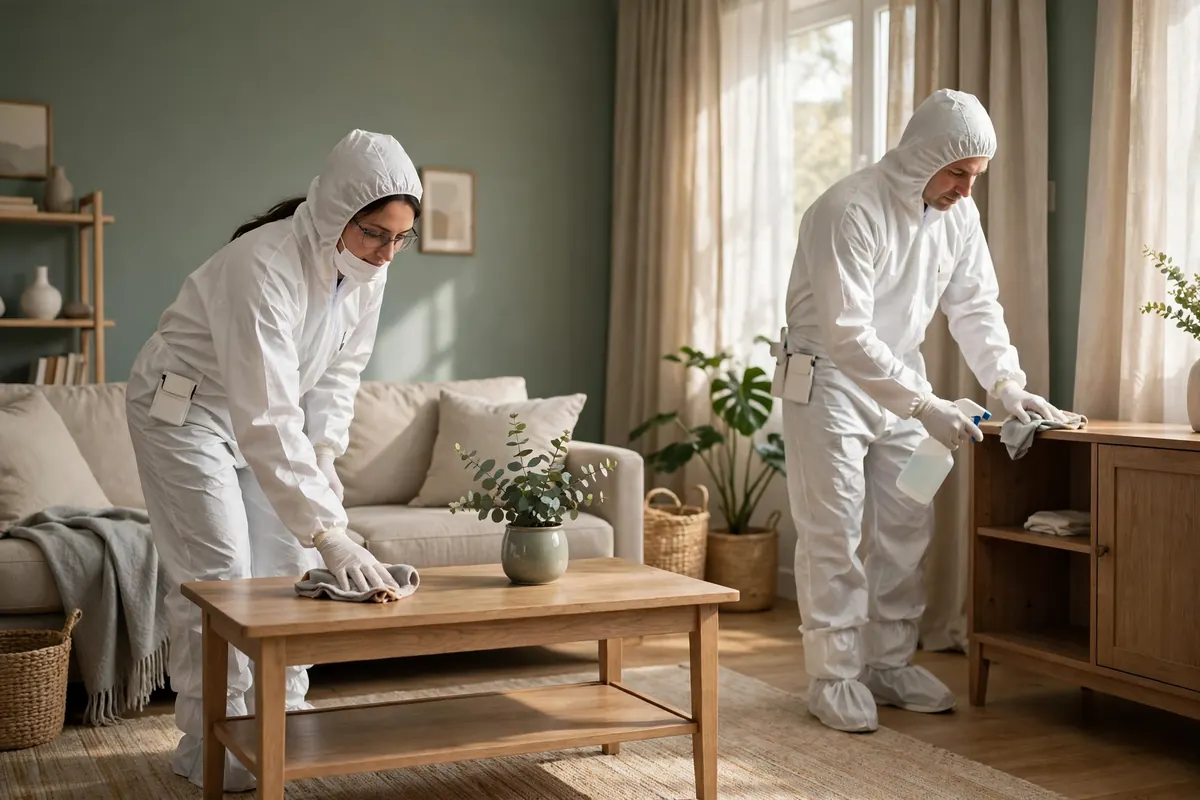
Crime scene cleanup is the removal of blood, bodily fluids and investigation residue after police release a scene. Trained crews in protective equipment remove affected material, disinfect every surface, and dispose of waste through licensed transport. It is the property owner's responsibility, and insurance often covers the cost.
What a crime scene crew does
The crew starts with a walk-through and a written quote. Then they set up a work zone that keeps the affected area separate from the clean parts of the property. Anything blood or fluid has soaked into, carpet, padding, flooring, upholstered furniture, mattresses, is removed and sealed as regulated medical waste. Hard surfaces are washed and then disinfected with products made for bloodborne pathogens. The crew also deals with what investigations leave behind: fingerprint powder, which gets into everything, and tear gas or pepper spray residue when it was used. If gas residue is the main problem, the dedicated tear gas cleanup page explains that work in detail.
When the cleaning is done, the crew tests surfaces to confirm disinfection worked, treats any odor at its source rather than masking it, and walks you through the space before they leave. Waste leaves in sealed, labeled containers with a licensed transporter, and the paperwork is available to you for insurance.
Scenes we are called to
Homicides and violent assaults
The hardest calls, and the ones where professional help matters most. A violent scene can involve large amounts of blood spread well beyond where the event happened, because injured people move. Crews are trained to find and treat the full affected area, including places a distressed family member would never think to check.
Break-ins, vandalism and police activity
Not every crime scene involves an injury. Forced entry can leave blood on glass and floors, and investigations leave fingerprint dust on every touched surface. Businesses call after robberies and after police activity inside the premises, because the space cannot reopen until it is clean and safe.
Scenes involving a death
When a crime involves a death, the work overlaps with death cleanup and, where the death was not found right away, with unattended death cleanup. One crew handles the whole job; you do not need separate services for separate labels.
Safety rules the crew works under
Blood can carry hepatitis and other infections, and it stays risky after it dries. Federal workplace rules, the OSHA bloodborne pathogens standard (29 CFR 1910.1030), require employers in this trade to train their crews, provide protective equipment and follow a written exposure plan. In four states the trade itself is registered: California registers trauma scene waste practitioners with its health department, Georgia registers firms with the Secretary of State, Florida requires biomedical waste permits through its health department, and Illinois requires registration with its environmental agency. We check crews against those registrations where they apply, and against training and insurance everywhere.
What it costs and who pays
Price depends on the size of the affected area, how much material must be removed, and how long the crew is on site. The the dedicated page publishes typical ranges for common situations. Homeowners and commercial property insurance very often cover this work, and after a violent crime your state victim compensation program can repay costs insurance does not. The final price is confirmed by the contractor after seeing the job, in a written quote before work starts.
A note on timing
Do not clean anything yourself before the crew arrives, and do not let well-meaning friends do it either. Apart from the infection risk, cleaning before the scene is released can harm an investigation, and cleaning after release without protection exposes the person doing it. Keep the door closed, keep people and pets out of the room, and make the call. Help is available at any hour.
Questions families ask us
When can crime scene cleanup start?
Only after the police or the coroner release the scene. Cleaning before release can destroy evidence and create legal problems. Once the release is given, a crew can usually start the same day.
Do the police or the city pay for the cleanup?
No. Cleanup is the responsibility of the property owner or the family. The good news is that homeowners insurance often covers it, and state victim compensation programs can repay costs after a violent crime.
What does a crime scene crew actually remove?
Blood and bodily fluids, affected flooring, carpet, furniture and personal items that cannot be disinfected, plus any residue from fingerprint dust or tear gas used during the investigation. Everything removed is treated as regulated waste.
How long does crime scene cleanup take?
A single room is often finished in a few hours. Larger scenes, or scenes where fluids have soaked into subfloor or walls, can take a full day or more. The crew gives you a time estimate with the written quote.
Will the crew talk to my neighbors about what happened?
No. Crews arrive in unmarked vehicles, work quietly and do not discuss the job. Discretion is a standard part of this service.
One call starts the process
You do not have to face the scene, the smell or the paperwork alone. Call and we will connect you with a trained, verified local cleanup crew, day or night.
Call NowOpen 24 hours, every day, nationwide.