Scenario guide
Can You Stay in the House After a Death?
It is often the first practical question after the officials leave: can we actually sleep here tonight? The answer, for most homes and most deaths, is yes, with one room treated differently from the rest. This page walks the house room by room: where the risk really is, who needs extra care, and the situations where leaving for a few nights is the better plan.
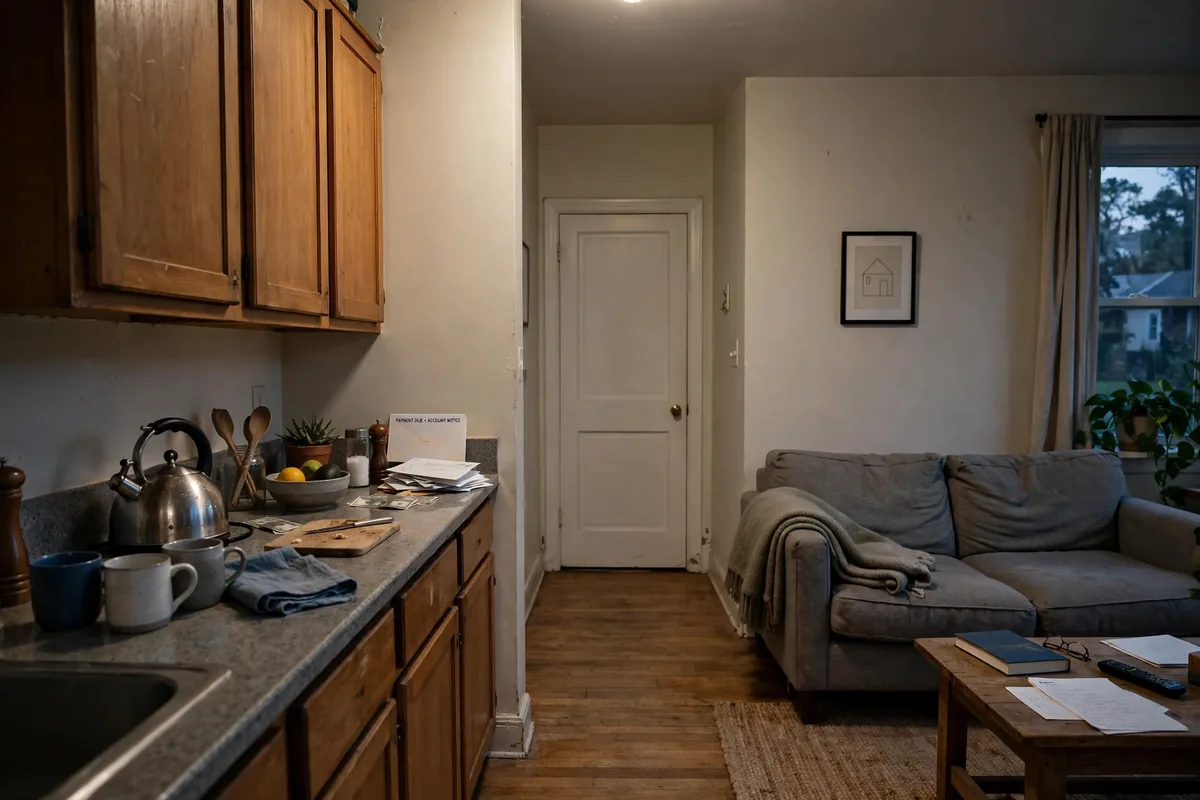
In most cases, yes. After a death at home, the risk sits in the room where it happened, not in the house as a whole. Close that room, keep children and pets out of it, and the rest of the home is usually safe to live in while cleanup is arranged. Leaving becomes the right call when fluids have spread through shared floors or systems, or the discovery came very late.
The risk has an address: one room
Biohazard risk after a death is a contact risk, and contact has a location. The fluids, and the bacteria and bloodborne pathogens in them, are where the body was: the bed, the chair, the floor beneath, and whatever those fluids soaked through. The rest of the home was not touched by the event. That is the whole logic of a professional biohazard cleanup service crew's first move: seal one room, work it as a controlled space, and hand the house back around it. Your version of the same move is simple. Close the door. If the door does not close well, tape the gap or hang a blanket over it. Nothing and nobody goes in until the crew has been, including for things that feel urgent; the crew retrieves items for families every day.
Sleeping, eating and living around it
With the room closed, ordinary life in the rest of the home is safe. Cook in the kitchen, use the bathroom, sleep in another bedroom. Two habits carry most of the protection: wash hands after anything connected with the affected room, and do not move objects out of that room into the living space, because objects carry the risk with them. Laundry is the common question. Bedding and clothing from elsewhere in the house can be washed normally. Anything from the affected room itself should not go through your machine; it is part of the scene, and the crew handles or disposes of it as regulated waste.
Children and pets change the calculation, not the answer
Adults can be told a room is closed and understand why. A four year old and a cat cannot, and both are drawn to exactly the door that matters. For households with small children or free roaming pets, the honest options are: a lock or latch the child cannot defeat and a pet kept in a part of the home away from the room; or a few days with relatives or at a hotel until the room is cleared, which many families choose even when it is not strictly required. After a late discovery, where the contamination is heavier, boarding the pet and sending the children to family is what experienced crews recommend most often. It is logistics, not alarm.
The late discovery exception
Everything above assumes the death was found promptly. A discovery after days is a different scale of event: fluids have had time to travel through flooring into the structure, insect activity has spread material, and odor compounds are in soft furnishings well beyond the room. Staying is often still possible, with the room sealed and windows managed, but the margin is thinner and the judgment should not be yours alone. In that situation an assessment call costs nothing and settles it: the crew lead can tell you from the discovery time, the season and the layout whether the home is a stay or a leave. If you are the person who made that discovery, found a loved one days later covers the situation itself, including what those days did inside the room.
Air, odor and the worry nobody says out loud
The question underneath this page is usually not about germs. It is about whether the house still feels safe, and whether the smell means something is wrong everywhere. Two facts help. First, odor is a traveler: it moves through shared air, gaps under doors and ductwork, which is why a house can smell of an event that contaminated one room. Smell in the hallway is not evidence of contamination in the hallway. Second, odor can outlast safety: a home can test clean and still hold a smell in materials, which is a quality problem with its own diagnosis. The persistent version of this problem, a smell that survives a cleanup and returns on warm days, has its own diagnosis page: why a cleaned house can still smell of a death. Neither fact asks you to ignore your nose. Both say: use testing, not smell alone, to decide where it is safe to be.
Special cases: immune systems, wells and shared buildings
Three situations lower the threshold for leaving. A household member with a weakened immune system, from chemotherapy, transplant medication or certain conditions, should not share air and surfaces with an uncleaned scene any longer than necessary; a few nights elsewhere is the safer course. Shared buildings change the edges: in apartments and duplexes, fluids can reach a neighbor's ceiling and odor a neighbor's rooms, and the building's management becomes part of the conversation early. And if the death involved a firearm or a large blood loss across more than one room, treat the affected area as plural from the start rather than sealing one door and hoping.
A simple rule to sleep by
If the death was recent, the room can be closed, and the people in the home can be kept out of it, stay. If any of those three fails, go, and let the crew work an empty house; it is faster for them and easier on everyone. The cleanup itself, once booked, is measured in hours to a few days depending on discovery time, and the handover includes testing, so the question answers itself permanently: the room comes back verified, not just visibly clean. Until then, one closed door is doing more work than any amount of worry.
Questions families ask us
Can we sleep in the house tonight, in a different room?
Usually yes, once the affected room is closed off. In most cases the contamination is confined to the room where the death happened and whatever shares a wall or floor with it. Seal that room's door, keep people and pets out, and sleep elsewhere in the house. If the discovery was late and fluids have spread, a crew assessment settles the question the same day.
Is it dangerous to be in the house at all after a death?
The hazard is contact, not presence. Blood and fluids carry infection risk when touched or disturbed; being elsewhere in the home, breathing its air, is a much smaller matter. The real exceptions are a heavily decomposed scene with fluids through shared flooring, and odor compounds strong enough to affect the whole home. Both are reasons for an assessment, not panic.
What about the children and our pets?
Keep them out of the affected room entirely, and be careful with anything that comes out of it. Children explore and pets investigate; neither understands a closed door the way adults do. Boarding a pet for a few days, or sending children to family until the room is cleared, is a common and sensible choice after a late discovery.
The smell is in the whole house. Does that mean we must leave?
Not necessarily. Odor travels through shared air and ductwork far beyond the contaminated materials, so a whole house smell does not mean a whole house contamination. Ventilation, a closed affected room and the cleanup itself usually bring the rest of the home back quickly. If the smell persists after a proper cleanup, that is a separate diagnosis: something was left behind.
Can we stay while the cleanup is happening?
Most families stay in the home and out of the way, and crews are used to working around that. The affected room is sealed and worked in protective equipment; the rest of the house stays livable. For large or multi day jobs, or where the home is small, a night or two elsewhere can be kinder. Ask the crew lead what they recommend for your layout.
When is leaving actually the right call?
When contamination has reached shared systems or multiple rooms, when someone in the home has a weakened immune system, when a child or pet cannot be kept reliably out, or when staying means sleeping next to a scene nobody should sleep next to. In those cases a few nights out while the crew works is not an overreaction; it is the plan.
One call starts the process
You do not have to face the scene, the smell or the paperwork alone. Call and we will connect you with a trained, verified local cleanup crew, day or night.
Call NowOpen 24 hours, every day, nationwide.