Guide
How to Remove Death Odor From a House
"Will the smell ever go away?" is the question families ask most after an unattended death, and it deserves a straight answer: yes, when the work is done in the right order. This guide explains where the smell actually lives, why the common fixes fail, and the sequence professionals use to end it for good.
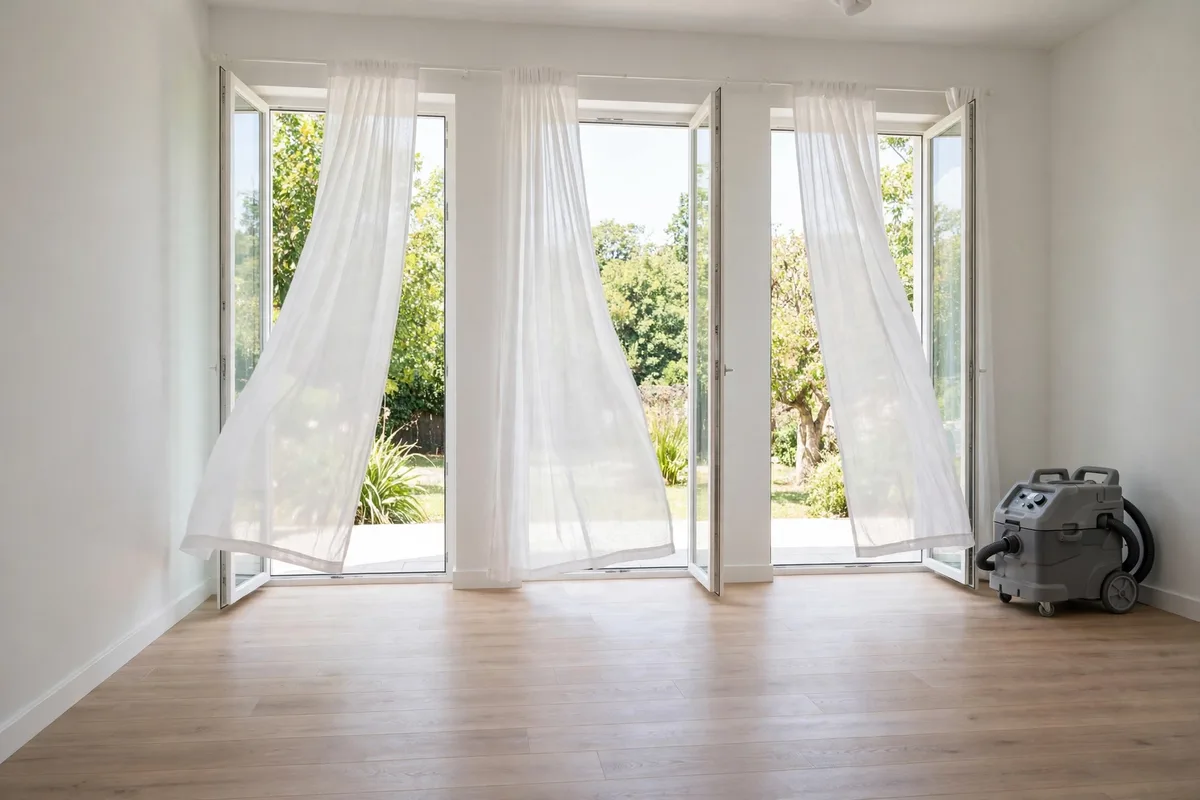
Death odor is removed by removing its source: the materials the fluids soaked into. Air fresheners, ozone machines and paint all fail on their own because the odor is not in the air, it is in carpet, padding, subfloor, drywall and insulation. The working sequence is source removal, disinfection, professional deodorizing, and sealing only what cannot be removed.
Where the smell lives: in materials, not in air
Decomposition releases compounds with names that tell the story, putrescine and cadaverine among them, along with sulfur compounds the human nose detects at extremely low levels. In the first days those compounds are in the air. Then they migrate: into carpet and the padding under it, into mattress foam and upholstery, into wood flooring and the subfloor beneath, into drywall, insulation and even concrete. Removing the deceased stops further decomposition at the property, but it does not remove the fluids and contamination that already entered the surrounding materials. That is why a house can be emptied, aired for a week, and still smell: the building itself has become the source. The physics of how this spreads over time is set out in our guide on what happens inside a home over time.
Why the common fixes fail
Air fresheners and household cleaners treat the air and the surface. The source is under both. The room improves for hours and the odor returns, because nothing about the reservoir changed.
Deodorizing without source removal is the same loop in professional dress: the odor may temporarily improve and then return. Crews see this pattern constantly in homes where a well meaning relative, or a cheap operator, fogged a room and left the padding in place.
Ozone alone is the headline fix people reach for, and it is genuinely useful in its place: it oxidizes odor compounds in air and on exposed surfaces. Its limits are physical. It does not penetrate a soaked subfloor, it cannot neutralize material that is still producing compounds, and it is hazardous to breathe, so it runs only in sealed, empty spaces. Used after source removal, it finishes the job. Used instead of source removal, it perfumes the failure for a day or two, and on a humid afternoon the smell is back.
The sequence that works
- Find the full extent. Testing and inspection map where fluids traveled, including beneath flooring, behind baseboards and inside wall cavities, where hidden contamination is the usual reason odor lingers after a cleanup.
- Remove the source. Material that cannot be disinfected comes out as regulated waste: carpet, padding, affected flooring and subfloor sections, saturated drywall or insulation.
- Disinfect what remains. Structural surfaces are washed and disinfected, so the remaining material stops being a biological source at all.
- Deodorize professionally. With the source gone, ozone, hydroxyl or thermal fogging treatments clear what is held in the air and on surfaces, in that order and not before.
- Seal, last. Where sound material cannot be removed, a shellac based or oil based odor blocking primer seals residual odor in before repainting. Standard latex paint does not do this job, and sealing only works when the source is gone: if the smell is still being produced, it will keep coming back through any coating.
Why it comes back on warm days
Temperature is the tell. Materials that have absorbed odor compounds release them faster as they warm, so a room can smell acceptable through a cool morning and be unmistakable by a warm afternoon. If that sentence is your situation, our guide to a death smell that came back after cleaning is the diagnosis page for it. This is why the failure pattern is so consistent: a house aired out over winter smells fine at a February viewing and wrong again in the first warm week; a rental passes a visual inspection and fails at re-let, when the new tenant's first hot day announces what the checklist could not. It is also why "we cleaned it and it came back" is the most common story in this field. The reservoir did not return; it was never removed, and the weather simply reported it. Any finished job should be judged the hard way: a warm room, a closed door, time for the air to settle, and then a nose. A job that only passes on a cold morning has not passed.
Special situations
Rentals and apartments. Odor travels through shared ventilation and ductwork into neighboring units, which is how one unit's undiscovered death becomes a whole building complaint, and how a landlord can pass a visual inspection and fail at re-let when the next tenant's first warm day arrives. Managers will find the operational version on our property managers page.
Vehicles. Upholstery foam and carpet in a vehicle hold odor the same way a mattress does, in a smaller, hotter space. The sequence is the same: source material out, treatment after.
When to call it professional work
If the person was found within hours and nothing soaked beyond a hard surface, household cleaning may genuinely be enough; our guide on cleaning up a biohazard yourself draws that line honestly. Once fluids have had days in soft materials, odor removal is inseparable from the cleanup itself, and it is done as one job under unattended death cleanup or, where structure is involved, biohazard remediation. The test of any finished job is simple: a warm room, a closed door, and a nose that finds nothing. Anything less is the loop starting again.
Questions families ask us
Will the smell of death eventually go away on its own?
Not reliably. Airing a room fades the airborne part in days, but the odor compounds sit inside carpet, padding, wood, drywall and subfloor, and they keep releasing. Homes left to air out commonly smell acceptable in winter and unmistakable again in the first warm week.
Does an ozone machine remove death odor?
Ozone can break down odor compounds in the air and on exposed surfaces, and professionals use it as one stage of the work. On its own, over an unremoved source, it perfumes the failure: the material underneath keeps producing odor after the machine is gone. Ozone is also unsafe to breathe, so it runs in sealed, empty rooms only.
Can I just paint over the smell?
Paint is the last step, not the first. A shellac based or oil based odor blocking primer can seal in residual odor on a surface whose source has been removed or neutralized. Standard latex paint does not block odor, and sealing over a live source traps nothing; the smell works its way back through.
How long does professional odor removal take?
It is part of the cleanup rather than a separate visit: source removal and disinfection first, then deodorizing stages such as ozone or hydroxyl treatment and fogging where needed, then sealing. On a single room job the whole sequence usually completes within the cleanup's one to three days.
Can the smell get into other rooms or the heating system?
Yes. Odor compounds travel on air currents and through shared ventilation and ductwork, which is how one room's problem becomes a complaint from the next room or the next unit. Where ductwork has carried the odor, the affected runs and filters are cleaned or replaced as part of the job, or the smell returns every time the system runs.
One call starts the process
You do not have to face the scene, the smell or the paperwork alone. Call and we will connect you with a trained, verified local cleanup crew, day or night.
Call NowOpen 24 hours, every day, nationwide.